
The Off Switch is a simple card and app that helps you stop phones from derailing sixth form learning, behaviour, and wellbeing, while giving 16- to 18-year-olds a realistic way to manage their own screen habits as emerging adults.
On this page, you’ll see how it works in sixth form settings, example routines you can roll out, what leaders usually notice after a pilot, and how to share our sixth form white paper with your stakeholders.
The Off Switch
× Sixth Forms
What you’re trying to do
If this sounds like you, you’re in the right place.
1. Protect sixth form lessons and supervised study from constant phone distraction.
2. Prepare students for higher education, apprenticeships, and work, where no one locks phones away for them.
3. Align your approach with DfE guidance, Ofcom’s media literacy role, and the Online Safety Act, while using the discretion given to sixth forms.
4. Support student and staff wellbeing by cutting down out-of-hours email, chat, and group-chat pressure.
5. Move from simple restriction to a model of digital accountability, where students practise judgement and responsibility around phones.
Where it starts to go wrong
The issue isn’t that sixth forms “don’t care.” It’s that the environment is built for constant connection, while post-16 education is meant to increase autonomy, not rely on control alone.
1. Phones routinely distract sixth forms, undermining lessons, discussions, and study time. Staff waste energy debating exceptions and fairness rather than focusing on teaching.
2. During the sixth-form day, expectations shift between subjects and teachers, so students quickly spot inconsistencies. Corridors and social spaces become grey zones with unclear rules.
3. Staff receive constant notifications from email, Teams, and MIS alerts late into the evening, particularly sixth-form leaders managing UCAS, safeguarding, and exam administration. Lacking clear norms, they feel pressure to respond immediately, even outside working hours.
4. Students encounter always-on group chats, socials, and news feeds that make revision, coursework, and rest challenging. Those already managing anxiety, procrastination, or executive function find it harder to focus, drawn repeatedly to their phones.
5. If sixth forms simply replicate lower school bans, students miss crucial opportunities to develop digital self-management before university, work, or training.
How The Off Switch helps

Why it makes sense
This approach is built for digital accountability. It protects learning and wellbeing while also helping students build the capability to manage phones responsibly across different contexts. This reflects proportionality in practice. Sixth formers are treated as emerging adults, with more autonomy than lower school students, but clear boundaries where the risk to learning or safety is high. The approach fits within DfE guidance, which allows sixth forms limited access to phones at certain times and in certain locations to reflect their increased independence and responsibility. Most importantly, it moves the goal from “no phones visible” to "competent, reflective digital behaviour,” which is what students will actually need after they leave school.
How it fits into your day
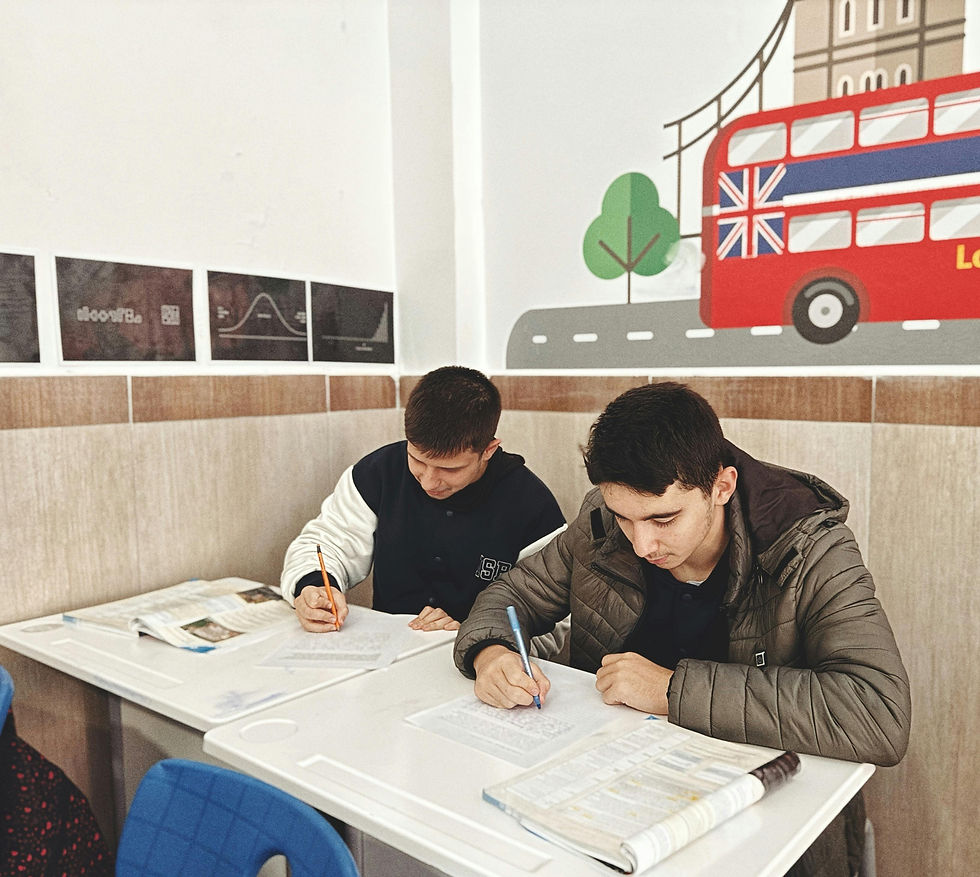
During taught lessons, the approach is straightforward. Students are required to have their phones Off Switch-ed and away during all timetabled lessons and seminars. They tap their phone on the card as they enter or sit down, and socials, games, and non-essential messaging go quiet. Essential learning tools can remain available if needed. In supervised and silent study spaces, study rooms become “Off Switch by default” environments. Students tap into a Study mode when they sit down, keeping notes, research tools, and calculators accessible while parking the apps that pull them off task. Social and shared spaces gain clearer norms through flexible application. Common rooms and social areas can implement the Off Switch during tutor time or during specific quiet hours, allow normal use at other times, and exercise extra care around nearby younger pupils. For staff, the system offers practical boundary management. Staff create simple modes, such as in class, Meetings, and at home, so work tools stay where they belong and that “always on” feeling is reduced without losing access to genuine emergencies.

How it feels over time
Staff spend less energy fighting phones and more time teaching and supporting students. Students, in turn, see phone governance as part of becoming ready for adult digital life rather than just another set of rules imposed on them. Conversations about misuse shift from “give me your phone” to “how do we help you meet the standard we’ve set here.” This reframing transforms disciplinary moments into coaching opportunities. Leaders gain a clear, concrete example of digital accountability in action to share with governors, trust boards, and inspectors, demonstrating practical implementation of wellbeing and safeguarding commitments.
Routines that work well for sixth forms
“Learning time” mode
Who: Sixth forms and post-16 on school or college sites.
When: Lessons, seminars, supervised study, workshops, tutorials, and exams.
Apps off: Socials, games, non-essential messaging, streaming, and shopping.
What stays on: Learning platforms, notes, calculators, approved exam tools, accessibility apps. For staff, safeguarding systems and registers.
How it helps: Protects attention in formal learning environments while still allowing legitimate learning tools. Students experience a clear difference between “phone for learning” and “phone for everything else.”
Staff “on duty” mode
Who: Teachers, tutors, support staff, cover, and pastoral teams.
When: Teaching, duty, assemblies, parents’ evenings, and progression meetings.
Apps off: Personal socials, non-urgent messaging, personal email. Optionally work email and chat during contact time, depending on policy.
What stays on: Safeguarding and MIS apps in live use, emergency contacts, and the school switchboard.
How it helps: Models the focus you’re asking from students, reduces low-level distraction, and supports safe supervision.
Study and revision mode
Who: Year 12 and 13 students in sixth forms, sixth form colleges, and FE colleges with Level 3 routes.
When: Library time, silent study periods, revision sessions, and mock weeks.
Apps off: Socials, games, non-essential messaging, streaming, shopping, and most group chats.
What stays on: Research tools, notes, citation managers, the VLE, timers, and music if allowed.
How it helps: Gives students an adult way to ring-fence concentration and practise the self-regulation they’ll need in halls, training centres, and workplaces.
Common room and social blocks
Who: Sixth form centres, colleges, and post-16 hubs.
When: Tutor time, specific quiet hours, joint lower-school events, or visits from universities and employers.
Apps off: As agreed locally, usually socials and video apps, to protect atmosphere and privacy.
What stays on: Calls and essential messaging, especially for commuting or caring responsibilities.
How it helps: Keeps shared spaces genuinely social and respectful, while still acknowledging that sixth formers need some controlled access as part of their growing independence.
Staff and student “off-duty” modes
Who: Sixth form staff and students.
When: Evenings, weekends, holidays, and exam leave.
Apps off: For staff, work email, chat, and platforms after an agreed time. For students, chosen group chats, socials, and news after a set hour.
What stays on: Personal communications, emergency contacts, and essential transport or caring apps.
How it helps: Connects what you say about wellbeing, rest, and sleep with actual behaviour. It signals that switching off is allowed and expected.

Our white paper on sixth-form digital accountability
Get practical, research-backed insights for governors, trust boards, and policy discussions with our white paper: Digital Accountability and Mobile Phone Use in UK Sixth Forms.
The paper offers a solid foundation for sixth-form phone policies, making the case that sixth forms represent a unique stage where the aim is to help students develop skills and responsibility rather than simply manage their behaviour.
It examines the UK policy and regulatory landscape, explaining how DfE guidance, Ofcom's media literacy work, and the Online Safety Act influence decisions about phones in sixth forms while highlighting where leaders retain genuine discretion to adapt their approach to their specific setting.
Drawing on recent UK research on smartphones, wellbeing, and school phone rules, the paper explains why basic restrictions might not suit 16- to 18-year-olds preparing for adult life and needing to develop self-regulation skills.
Finally, it presents a practical digital accountability framework with key principles, curriculum ideas, and behaviour strategies that help sixth forms support learning while preparing students for life in the digital world beyond school.
Common questions
Are we allowed to do this under DfE mobile phone guidance?
Yes. The DfE’s Mobile phones in schools guidance is non-statutory and treats sixth forms as a special case. It encourages schools to consider limited access at certain times and in certain locations to reflect increased independence and responsibility. Off Switch helps you use that discretion in a structured, evidence-based way.
Does this mean loosening standards compared with lower school?
Not necessarily. Digital accountability isn’t a relaxation of standards; it’s a shift in ambition. You can keep stricter rules for younger pupils while giving sixth-formers carefully bounded autonomy that matches their stage of development and your educational aims.
Will this add to staff workload?
The aim is the opposite. Inconsistent, ad hoc enforcement drains staff energy. Off Switch gives you a small set of shared routines, a neutral physical cue that does part of the talking, and simple scripts that support calm, proportionate responses. Over time, that reduces the number of draining confrontations, rather than adding new ones.
What about students who need their phone for accessibility or caring?
Digital accountability is about purpose, not punishment. Reasonable adjustments are part of the approach. You can allow assistive tech, medical apps, and agreed contact routes for carers, and be open about why those exceptions exist. You still keep shared expectations for behaviour in learning spaces.
How does the white paper fit into this?
The white paper, Digital Accountability and Mobile Phone Use in UK Sixth Forms, sets out the full argument, including theory, policy context, research evidence, and implementation guidance. The Off Switch programme is a practical way to bring that framework to life in your sixth form.